Standard hopper sorters use the 41-1-1-1-1 formula, which only works for stackable items (up to 64 or 16). If an unstackable item such as a potion, Shulker Box, or Totem enters a standard hopper, it emits a signal strength of 3 and can break the sorting line.
The Physics of Non-Stackable Hopper Signals
When an unstackable item (stack size = 1) enters a hopper, it fills 100% of that slot's capacity, instantly outputting signal strength 3 to a redstone comparator.
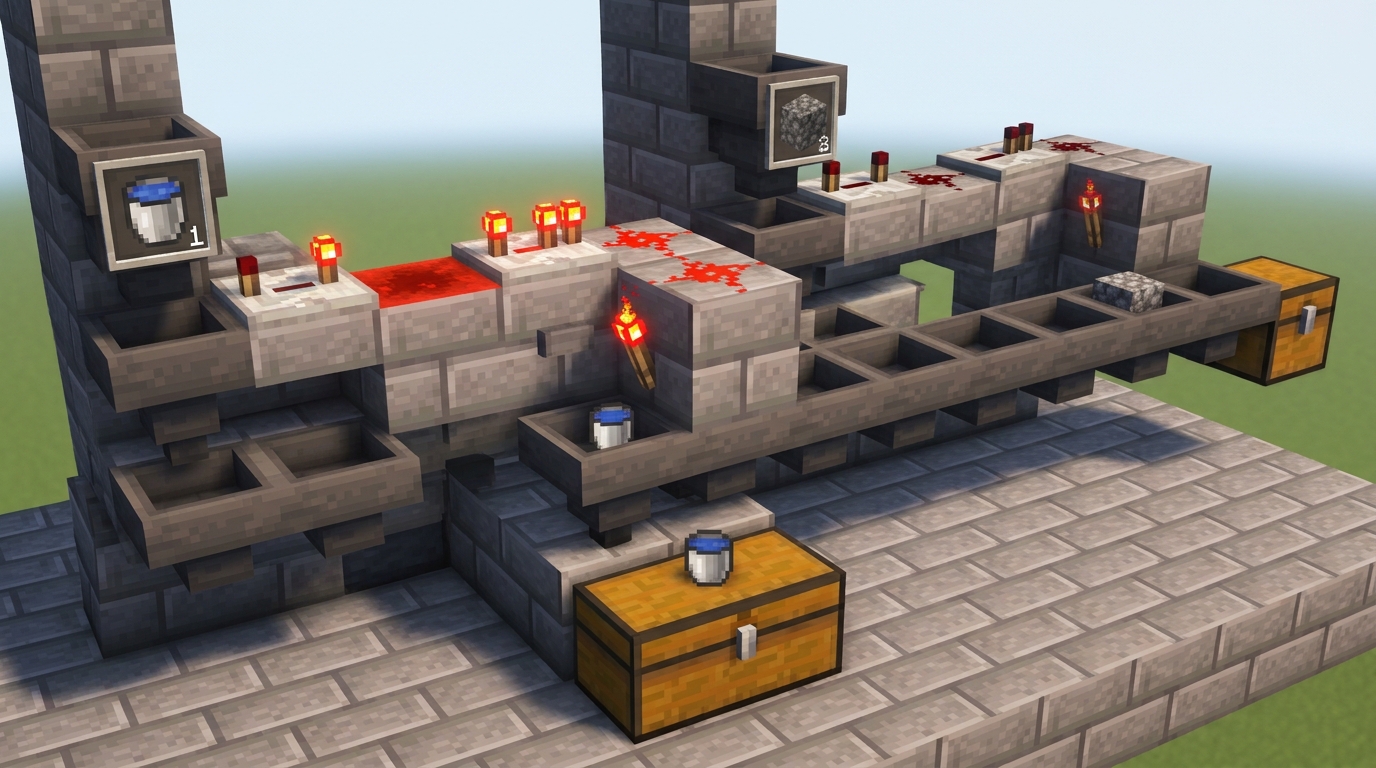
Building a 1-Tile Non-Stackable Filter
- Place a comparator reading from a top transfer hopper.
- Run a 3-long redstone line into a repeater set to 1 tick.
- When a stackable item passes through (signal 2), the redstone line does not reach the third dust block.
- When an unstackable item passes through (signal 3), it powers the third dust block, unhooking a piston below to divert the unstackable item into a separate chest.
Calculate your storage chest capacity with our Stack Calculator.
Build and test one sorting lane first
- Place the input chest and hopper line that carries items across the sorter.
- Build one detector lane with a comparator reading the temporary container used by the design.
- Connect the comparator output to the locking circuit and the destination hopper. Keep neighboring redstone dust isolated so one lane cannot power the next.
- Send one target item through the input, then send a different unstackable item. The target must reach its chest and the control item must continue to the overflow route.
- Repeat the test with a full input hopper and with the destination chest nearly full. Do not copy the lane until both tests pass.
Why a normal 41-item filter does not work
The common ImpulseSV filter depends on a predictable stack size and comparator strength. A water bucket, potion, tool, shulker box or named item has a maximum stack size of one, so it cannot use the same 41-item threshold. An unstackable sorter must inspect another property, route items through a purpose-built detector, or use separate processing behavior such as a brewing stand or furnace input.
Plan an overflow route
No survival sorter should delete unexpected input. End the hopper line in a visible overflow chest and label it. After expanding the build, test every accepted item once and check the overflow chest for false matches. If the machine crosses chunk borders, keep the active redstone and containers inside the same loaded area where possible.